Talpa
Talpa Search es una herramienta de búsqueda bibliográfica basada en IA que combina amplios modelos lingüísticos de Anthropic y OpenAI con datos bibliográficos de prestigio de Bowker, Syndetics Unbound y LibraryThing. Su objetivo es proporcionar a los usuarios datos bibliográficos precisos y fiables sobre libros y otros medios. Características principales: Búsqueda basada en IA: Talpa Search emplea modelos de IA para analizar y comprender las consultas de los usuarios, proporcionando resultados precisos y relevantes. Datos auténticos y fiables: La herramienta valida cada artículo con una base de datos de datos bibliográficos auténticos y fiables, lo que garantiza la fiabilidad de la información presentada. Priorización de la colección de la biblioteca: Talpa Search prioriza los artículos disponibles en la colección de una biblioteca, lo que facilita el acceso del usuario a los fondos relevantes. Configuración e integración: Los usuarios pueden configurar e integrar Talpa Search en sus sitios web, con enlaces y botones disponibles a través del administrador de Syndetics Unbound. Comentarios y mejora continua: Talpa Search agradece los comentarios de los usuarios para mejorar su rendimiento y experiencia. Casos de uso: Usuarios de bibliotecas que buscan datos bibliográficos precisos y fiables sobre libros y medios. Bibliotecarios y administradores de bibliotecas que buscan mejorar la experiencia de búsqueda y la precisión de su catálogo. Sitios web y plataformas que requieren una herramienta de búsqueda bibliotecaria basada en IA con datos fidedignos. Desarrolladores e investigadores interesados ??en explorar las capacidades y limitaciones de la IA en el ámbito de la búsqueda bibliotecaria. Talpa Search es una innovadora herramienta de búsqueda bibliotecaria basada en IA que combina modelos de lenguaje de IA con datos bibliográficos fidedignos para ofrecer resultados de búsqueda precisos y fiables.
Introducing Talpa: A Comprehensive Review of an Innovative AI Solution
In the ever-evolving world of artificial intelligence (AI), numerous tools have emerged to streamline processes and enhance productivity. Among these innovative solutions is Talpa, an advanced AI-powered platform designed to cater to the needs of businesses and individuals alike. This article offers an exhaustive description of the platform, including its features, functionalities, benefits, and more.
1. What is Talpa and what does it do?
Talpa is an intelligent automation platform that combines various AI technologies, including natural language processing (NLP), machine learning (ML), and deep learning, to automate repetitive tasks, extract valuable insights, and facilitate decision-making. The platform focuses on automating business processes, such as data entry, customer support, and content generation, enabling users to save time, reduce costs, and improve overall efficiency.
2. Problem that Talpa resolves
The primary challenge that Talpa addresses is the overwhelming amount of manual, repetitive tasks that consume valuable time and resources in many industries. By automating these tasks, Talpa allows businesses and individuals to focus on more strategic and creative aspects of their operations. Moreover, the platform's AI capabilities enable users to analyze vast amounts of data quickly, uncovering valuable insights that might otherwise go unnoticed.
3. Key functionalities of Talpa
Talpa's primary functionalities include:
a. Process Automation: Talpa automates various business processes, such as data entry, document management, and workflow orchestration, by leveraging AI and ML technologies.
b. Natural Language Processing (NLP): Talpa's advanced NLP capabilities enable the platform to understand and interpret human language, facilitating tasks like sentiment analysis, text classification, and content generation.
c. Machine Learning (ML): Talpa's ML algorithms allow the platform to learn from user interactions, improving its performance and accuracy over time.
d. Deep Learning: Talpa's deep learning capabilities enable the platform to analyze large datasets, identify patterns, and generate predictions, making it an ideal tool for data analysis and predictive modeling.
e. Integration: Talpa offers seamless integration with various third-party applications and services, allowing users to leverage the platform's AI capabilities within their existing workflows.
4. Real-world use cases
Talpa has been successfully implemented across various industries, including:
a. Customer Support: Talpa's AI-powered chatbots provide 24/7 customer support, handling routine inquiries and escalating complex issues to human agents when necessary.
b. Content Generation: Talpa assists marketing teams in creating engaging content, such as blog posts, social media updates, and email campaigns, by automating content generation and curation processes.
c. Data Analysis: Talpa's deep learning capabilities enable data analysts to analyze large datasets, identify trends, and generate predictions, facilitating informed decision-making.
d. Financial Services: Talpa automates various financial tasks, such as invoice processing and reconciliation, helping businesses streamline their financial operations.
5. Target audience
Talpa is suitable for various user segments, including:
a. Businesses seeking to automate repetitive tasks and improve operational efficiency.
b. Marketing teams looking to create engaging content and optimize their content strategies.
c. Data analysts and scientists requiring advanced AI capabilities for data analysis and predictive modeling.
d. Customer support teams aiming to provide prompt, accurate responses to customer inquiries.
6. Advantages and disadvantages
Advantages:
- Seamless automation of repetitive tasks
- Advanced AI capabilities for data analysis and predictive modeling
- Integration with popular third-party applications and services
- Scalable and customizable to meet unique business needs
Disadvantages:
- Steep learning curve for users unfamiliar with AI technologies
- Limited customization options for non-technical users
- Relatively high pricing compared to some competitors
7. Comparison with alternatives
Compared to other AI-powered automation platforms, Talpa offers a more comprehensive set of features and functionalities. However, alternatives like Automation Anywhere, UiPath, and Blue Prism focus more on robotic process automation (RPA), which might be more suitable for certain industries and use cases.
Pricing Model
Talpa offers various pricing plans to cater to different user segments:
- Free Trial: A 30-day free trial is available for users to test the platform's features and capabilities.
- Basic Plan: Starting at $500 per month, this plan is suitable for small teams and includes essential process automation features.
- Professional Plan: Priced at $1,500 per month, this plan caters to growing businesses and includes advanced NLP and ML capabilities.
- Enterprise Plan: Custom-priced for large organizations, this plan offers tailored solutions, dedicated support, and advanced integration options.
In summary, Talpa is an innovative AI-powered platform that offers a wide range of features and functionalities for automating business processes, analyzing data, and generating insights. While the platform may have a steep learning curve and higher pricing compared to some competitors, its comprehensive capabilities make it an attractive option for businesses and individuals seeking to streamline operations and improve overall efficiency.
También puede interesarte.


Motor de búsqueda semántico con IA. Encuentra respuestas directamente en miles de vídeos de YouTube. Gratis, fácil de navegar y rápido.
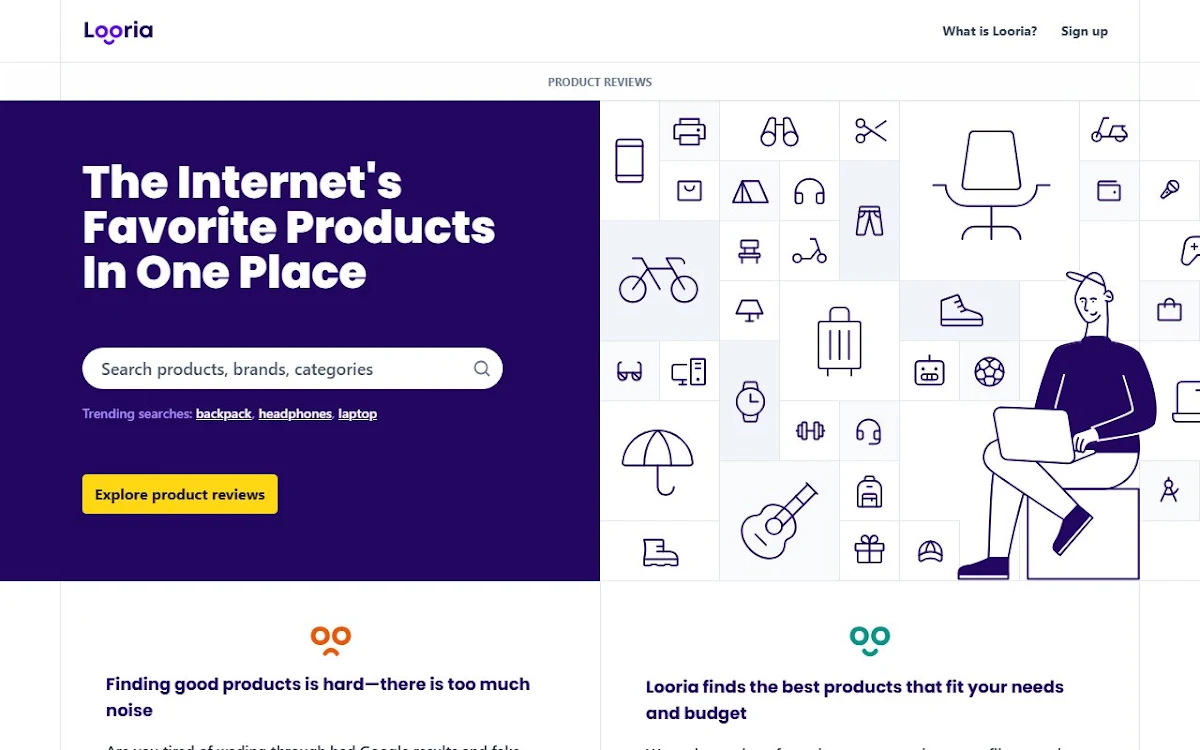

Looria encuentra los mejores productos que se adaptan a tus necesidades y presupuesto. Recopilan reseñas de las fuentes más confiables, filtran las falsas y resumen los resultados para que puedas tomar decisiones de compra más informadas.